

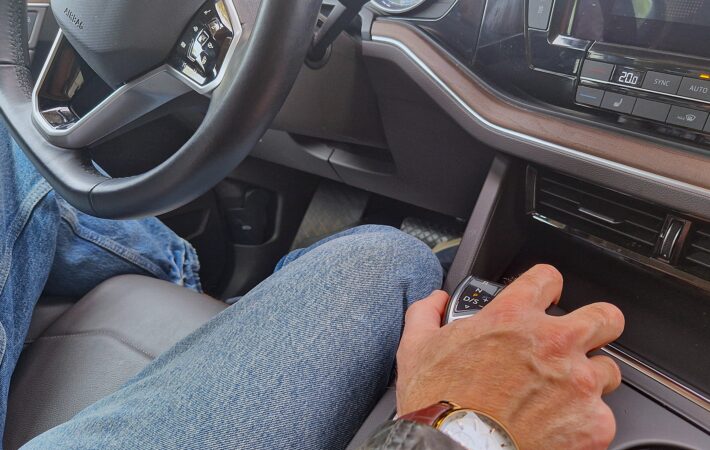
Start the engine, press the brake pedal and move the automatic transmission lever to different positions. The activation of the modes can be judged by the characteristic slight jolt.
Automatic transmission malfunctions may indicate:
— delay in switching on modes by more than 1-1.5 seconds;
— strong shocks when switching on modes (may also be the result of excessive engine idling or unreliable attachment of the power unit to the body or subframe).
Parking test
The purpose of the test is to check the condition of the gearbox and the engine as a whole.
Attention!
The parking test must be performed by an experienced mechanic. Unqualified performance of the test can lead to failure of the automatic transmission! This should be borne in mind by both the seller of the car and the one who takes responsibility for testing.
To perform the test, it is necessary
Fully warm up the automatic transmission (see above).
Securely lock the wheels of the car in all possible ways with a parking brake, anti-rollback stops, etc.
Start the engine and press the brake pedal with maximum force (hold it in this position until the end of the test).
Enable mode D.
Press all the way down and hold the gas pedal (no more than 5 seconds!).
Use the tachometer to determine the maximum engine speed.
Attention!
If the tachometer reading exceeds 3000 rpm, the gas pedal should be released immediately!
After a 5-7-minute break, repeat the test in R mode.
For a serviceable engine and automatic transmission, the maximum RPM value in both tests should be the same and within the range of 1800-2500 rpm (depending on the car model).
Checking the automatic transmission in motion
During a test ride, you should pay attention to the quality of gear shifting in all modes. They should not be accompanied by shocks, vibrations and extraneous noises. With moderate pressure on the gas pedal, the gear shift up should occur without increasing the engine speed (even for a short time). Also check the forced activation.


Leave a comment
Your email address will not be published. Required fields are marked *